


Completely
customised
care
Expert Physiotherapy & Chiropractic Care to Help You Move Comfortably Again
Knee pain can stop you in your tracks — whether it’s climbing stairs on Norton Street, running the Bay Run, or simply getting through a busy workday. At Incline Health Leichhardt, we help active adults, athletes, and older adults recover from knee injuries so they can return to the life they love.
If you’re searching for knee pain treatment Leichhardt, you’re in the right place. Our team combines physiotherapy, chiropractic care, sports rehab, pain relievers and personalised exercise programs to deliver long-lasting results without relying on medication or surgery unless absolutely necessary.
We understand knee pain is frustrating. You want answers, clarity, and a clear plan — not more guesswork. That’s exactly what we provide.
How Our Physiotherapists Help Treat Knee Pain
Your knee is a complex joint where the thigh bone, shin bone, and kneecap meet — supported by ligaments, tendons, muscles, and soft tissues. Because it takes so much load, it’s also one of the most easily injured joints, especially if you’re active.
Our physiotherapists take a hands-on, evidence-based approach to identify what’s causing your knee pain and what needs to be done to fix it, potentially including arthroscopic surgery. Treatment may include:
- Joint mobilisation and gentle manual therapy
- Strengthening of the muscles that stabilise the knee
- Taping to reduce pain and improve alignment
- Personalised exercise programs
- Gait and running assessments
- Education to help you move confidently and avoid future issues
- Chiropractic adjustments when appropriate
- Soft tissue work for tight or overloaded areas
You’ll always understand why you’re doing each step — and how it supports your recovery.
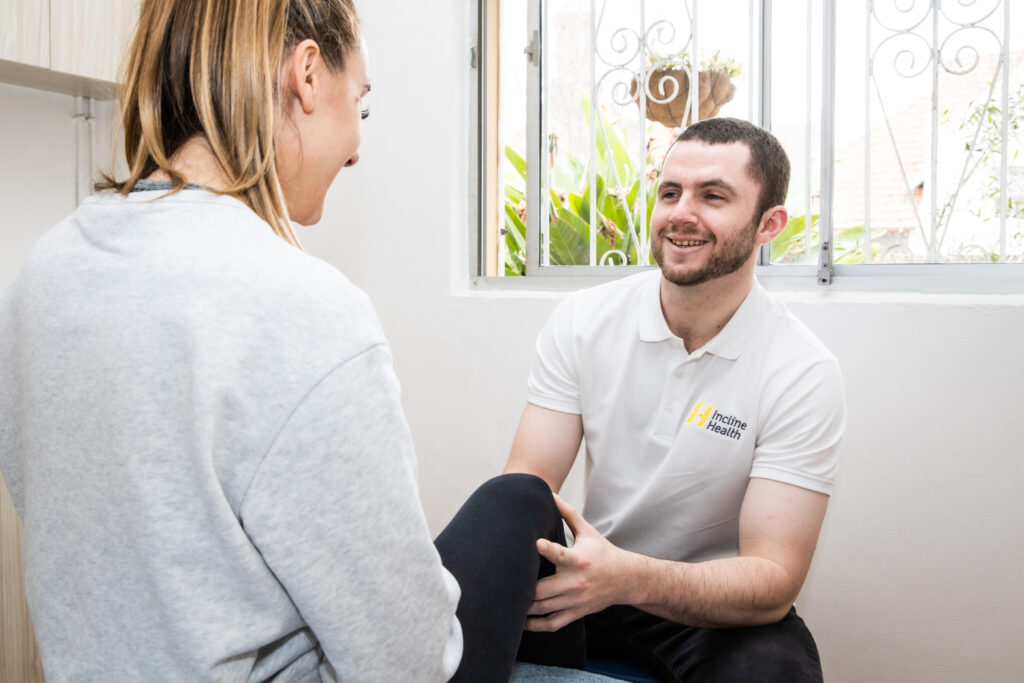
Common Knee Injuries We Treat at Incline Health
Our team sees knee pain every day, from minor injuries to significant ligament or cartilage damage. The most common knee injuries we treat include:
Patellofemoral Pain Syndrome (“Runners Knee”)
Often felt as pain behind or around the kneecap, especially when walking downstairs, squatting, or running.
Meniscus Tears
These can occur from twisting, squatting, or simply wear-and-tear over time. Not all meniscus tears require surgery — many respond well to physio.
Ligament Sprains & Tears
Including ACL (anterior cruciate ligament), PCL (posterior cruciate ligament), and collateral ligament injuries. We help with partial tears, complete tears (pre- or post-surgery), or chronic instability.
Tendinopathies (Tendon Tears or Irritation)
Often seen in runners, gym-goers, and people returning to sport too quickly.
Knee Arthritis & Degenerative Changes
Arthritis flare-ups, stiffness, swelling, and long-term joint pain.
Bursitis & Overuse Injuries
Common in physically active adults and people with jobs requiring kneeling or squatting.
Acute Injuries from Sport
Twists, falls, blows to the knee, contact sport injuries, and more.
Our Approach to Treating Knee Pain Injuries
Your knee pain story is unique — so your treatment should be too.
We don’t believe in temporary “quick fixes.” Instead, we follow a four-stage rehabilitation process that rebuilds strength, mobility, and confidence so you can return to your normal activities safely.
The Four Pillars of Our Practice
1. Accurate Diagnosis
We assess the painful area, joint alignment, muscles, ligaments, and movement patterns. This helps us understand whether your knee pain is caused by:
- Overload
- Muscle imbalance
- Torn ligaments
- Damaged cartilage
- Tendon irritation
- Osteoarthritis
- Poor biomechanics
If we suspect anything serious that may require surgery, we’ll organise imaging and coordinate with orthopaedic surgeons when needed.
2. Hands-On Pain Relief Treatment
We focus on strategies that reduce pain, reduce swelling, and help ease knee pain quickly:
- Manual therapy
- Joint mobilisation
- Massage and soft tissue release
- Ice pack guidance (yes — even frozen peas work wrapped in a thin towel!)
- Compression bandage education
- Activity modification
Most people feel relief within the first few sessions.
3. Strengthening the Knee Joint & Supporting Muscles
Rehabilitation is where lasting change happens. Your program may include:
- Quadriceps and glute strengthening
- Core stability
- Balance and stability training
- Tendon-specific loading exercises
- Return-to-running or sport drills
- Training for the injured leg and affected knee
Your exercise program is individually tailored — not a generic printout.
4. Long-Term Injury Prevention
You’ll learn how to:
- Maintain knee strength
- Improve biomechanics
- Reduce inflammation
- Build flexibility
- Avoid common causes of re-injury
- Stay active without irritating the joint
We’re here to help you stay strong, healthy, and confident long after your treatment ends.
Benefits of Physiotherapy for Knee Injuries
Choosing physiotherapy or chiropractic care for knee pain can:
- Provide natural pain relief
- Improve joint mobility
- Strengthen the muscles protecting your knee
- Restore balance and stability
- Reduce inflammation
- Prepare you for sport or everyday physical activities
- Reduce your need for medication
- Delay or avoid knee surgery
- Support recovery after minor injury or arthritis flare
Most patients notice meaningful improvement within a few weeks when following their personalised plan.
Make an Appointment at Incline Health Today
If knee pain is affecting your daily life — even if it comes and goes — now is the time to take action. A minor knee injury can quickly turn into a longer-term problem when left untreated.
Our team at Incline Health Leichhardt is ready to help you recover, rebuild, and move with confidence again.
FAQs — Knee Pain Treatment
What causes knee pain when bending?
Common causes include anterior cruciate ligament issues, patellofemoral pain, tendon irritation, cartilage wear, meniscus tears, or muscle imbalance affecting how the patella sits. A thorough assessment will determine the exact cause.
How long does knee pain take to heal?
Minor injuries may heal in 2–6 weeks. More complex injuries like torn ligaments or damaged cartilage may take several months. Most people improve faster with structured physical therapy.
Should I see a physio for knee pain?
Yes. Physiotherapists are trained to diagnose knee injuries, reduce pain, and create a plan to help you return to normal activities safely.
Can knee pain be cured?
Many knee conditions improve significantly with the right treatment. Degenerative conditions like osteoarthritis can’t be reversed, but symptoms can be managed extremely well.
When should I see a doctor for knee pain?
You should see a doctor if you experience severe pain, significant swelling, or inability to bear weight, or if your symptoms aren’t improving. Your physio can guide you if further investigation is needed.
How can you avoid knee injuries?
A few simple habits can reduce knee pain caused by overload or poor movement:
- Warm up before playing sports
- Maintain leg and core strength
- Avoid sudden changes in training volume
- Wear supportive footwear
- Keep body weight in a healthy range
- Prioritise good movement technique
What are the common causes of knee injuries?
- Poor biomechanics
- Muscle weakness
- Sudden increases in running or sport
- Trauma or twisting injuries
- Degenerative changes
Our Four Pillars of Practice
At Incline Health, we believe in delivering the best results to our customers. Our four pillars
of practice help us deliver industry leading experience to you at our clinic or at home.
1

Take
home
care
home
care
2
Multi-
disciplinary
medicine
disciplinary
medicine
3
Science
into
practice
into
practice
4